Artificial Intelligence (AI) is one of the most powerful technologies shaping the modern world. From smartphones and social media to healthcare and education, AI is everywhere. But what exactly is Artificial Intelligence, and how did it evolve into what we see today?
This beginner-friendly guide explains Artificial Intelligence, its history, types, and future, in a simple and easy-to-understand way.
What Is Artificial Intelligence (AI)?
Artificial Intelligence (AI) is the ability of a computer or machine to perform tasks that normally require human intelligence. These tasks include learning, problem-solving, decision-making, speech recognition, and image understanding.
In simple words, AI enables machines to think and learn from data.
Examples of Artificial Intelligence in Daily Life
- Voice assistants like Siri, Alexa, and Google Assistant
- AI chatbots for customer support
- YouTube and Netflix recommendations
- Face recognition on smartphones
- AI tools like ChatGPT and image generators
Evolution of Artificial Intelligence: A Brief History
The evolution of Artificial Intelligence happened gradually over several decades. Let’s understand it step by step.
1. Early AI (1950s–1970s): Rule-Based Systems
The concept of AI began in the 1950s when scientists started exploring whether machines could think like humans.
- In 1950, Alan Turing introduced the famous Turing Test
- Early AI systems worked on if-then rules
- Machines could not learn on their own

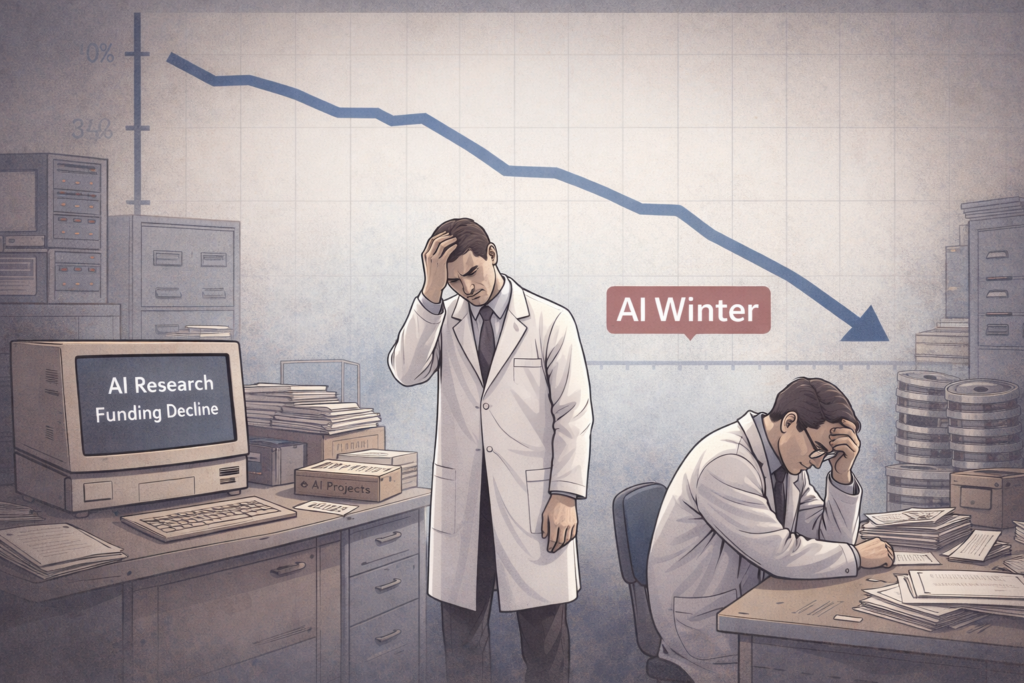
2. AI Winter (1980s–1990s): Slow Growth Period
During this phase, AI development slowed down due to:
- Limited computing power
- High expectations and low results
- Reduced funding and research support
This phase is known as the AI Winter.
3. Machine Learning Era (2000s): Learning from Data
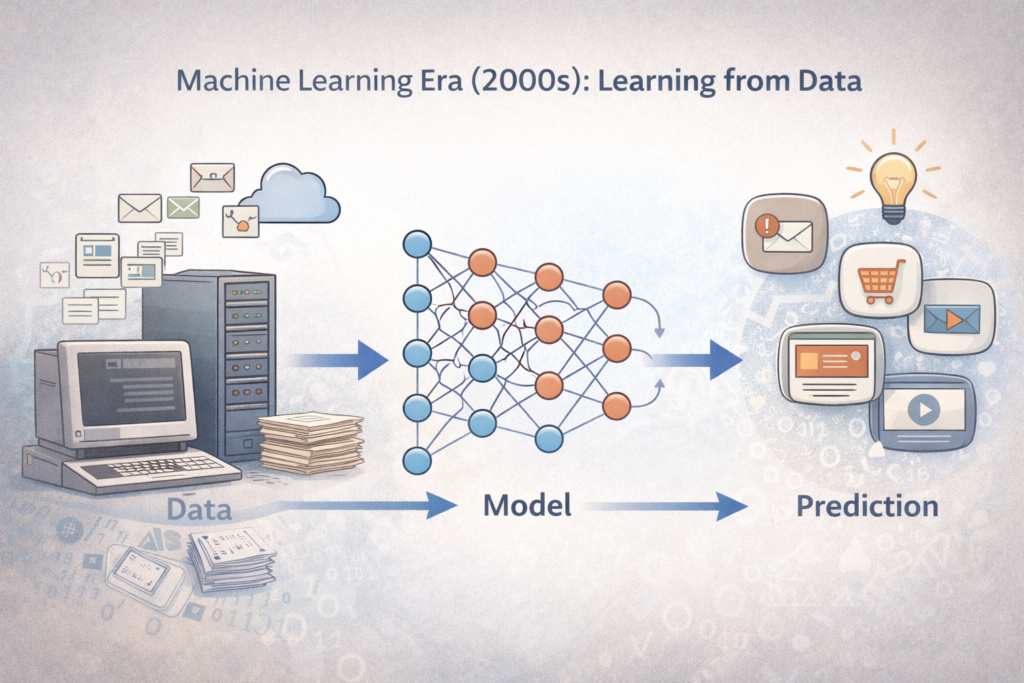
With the growth of the internet and digital data, AI systems started learning from large datasets instead of fixed rules.
This phase introduced Machine Learning, where machines improve performance using experience.
Key uses:
- Spam email detection
- Search engine ranking
- Product recommendations
4. Modern AI & Deep Learning (2010–Present)
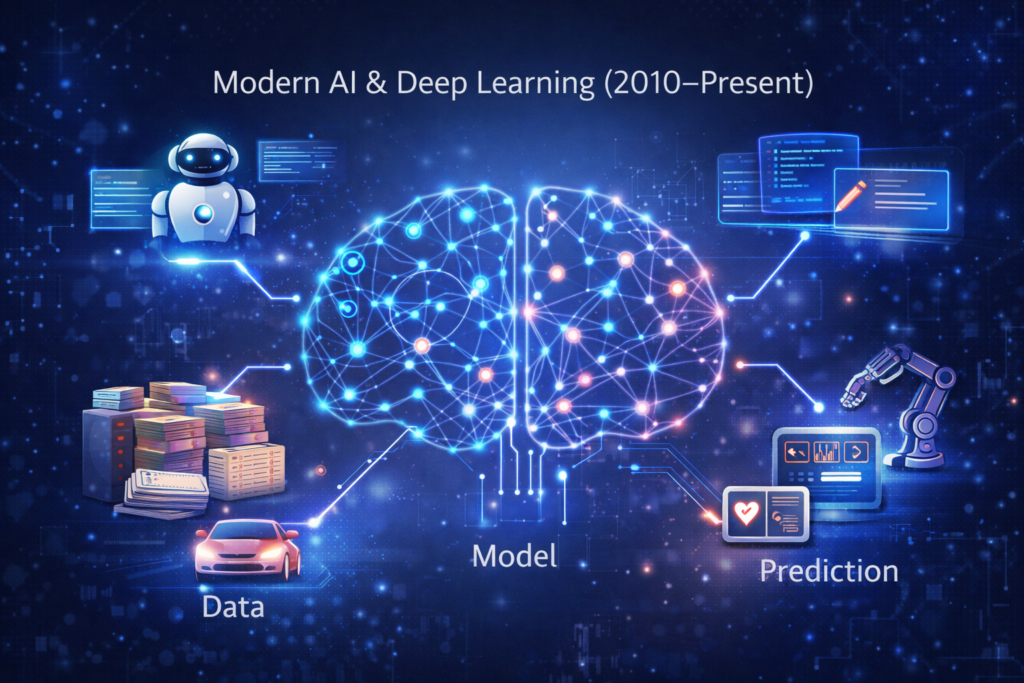
Modern AI is powered by Deep Learning and Neural Networks, inspired by the human brain.
Today’s AI can:
- Generate text, images, and videos
- Understand human language
- Drive autonomous vehicles
- Assist doctors in medical diagnosis
Types of Artificial Intelligence
1. Narrow AI (Weak AI)
- Designed for specific tasks
- Examples: Chatbots, voice assistants, recommendation systems
2. General AI (Strong AI)
- Human-level intelligence (still under research)
3. Super AI
- Hypothetical AI that surpasses human intelligence
Why Is Artificial Intelligence Important?
Artificial Intelligence is transforming industries by:
- Improving efficiency and accuracy
- Reducing human effort
- Enabling personalized learning and services
- Driving innovation in healthcare, finance, and education
However, AI also raises concerns such as data privacy, bias, and ethical usage, making AI education essential.
Future of Artificial Intelligence
The future of AI focuses on:
- Ethical and responsible AI
- Human–AI collaboration
- Explainable and transparent AI
- AI-powered education and automation
AI will not replace humans entirely but will enhance human capabilities.
Conclusion: Understanding AI Is the Future Skill
Artificial Intelligence has evolved from simple rule-based machines to intelligent systems that learn, adapt, and create. Understanding AI today helps individuals and businesses stay prepared for the future.
Whether you are a student, professional, or tech enthusiast, learning AI is no longer optional—it is essential.